

A B&N Mining Company LLC Project
A Basin-Scale Lithium Clay Discovery in Nevada’s Emerging Lithium Belt
Consolidating the Lida Valley and Gemini basins into a unified lithium system with demonstrated thickness, strong grades, and significant expansion potential.
905 ppm Li
Average Grade
across all intercepts to date
8,000 +
Acres of Target Zone
Across all claims
1,400 ft
Maximum Clay Thickness
22
Drill Holes Completed to date
Across LVL, EZ, and Gemini
Drilling Confirms Lithium Mineralization Across Multiple Zones of The Project
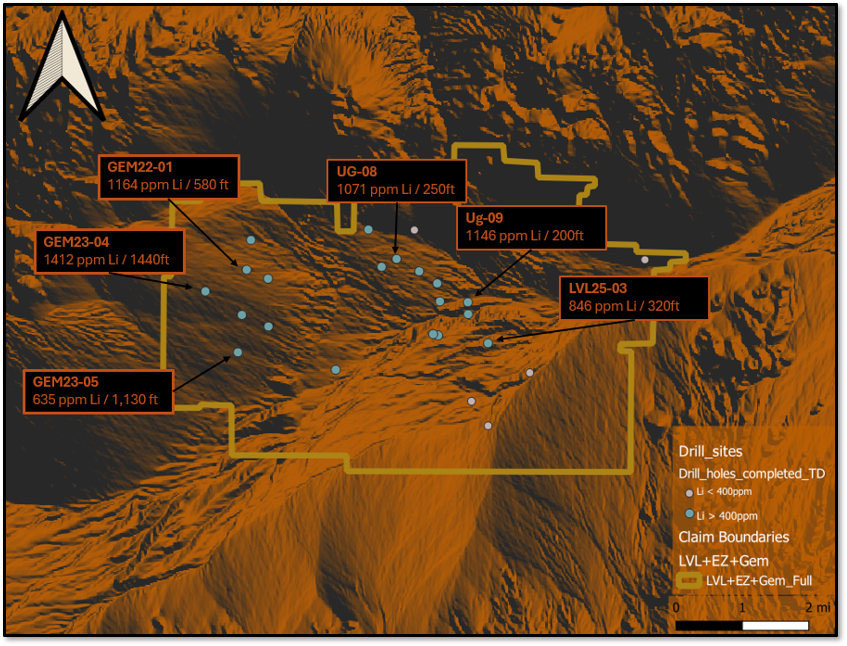
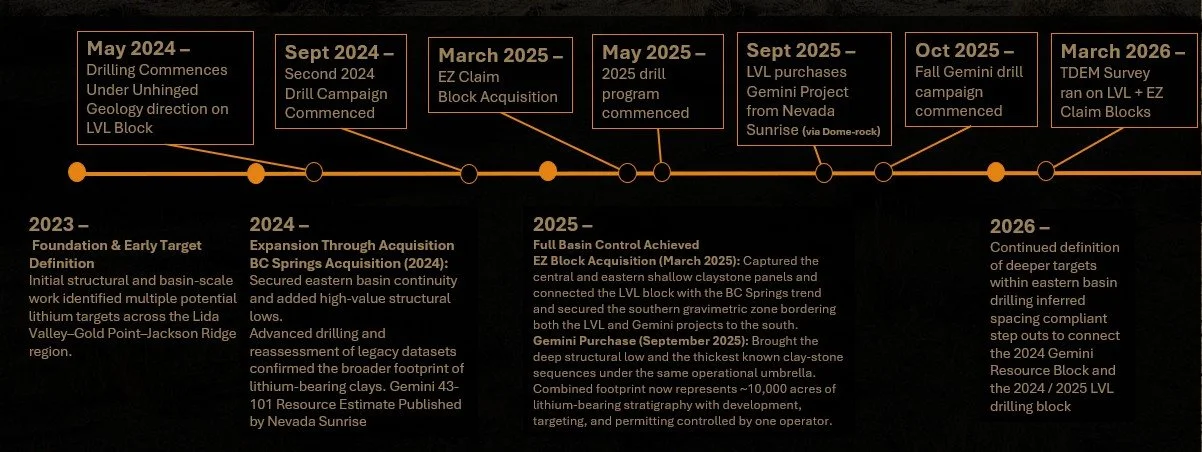
Since 2023, the Lida Valley Lithium Project has completed multiple phases of reverse circulation drilling targeting lithium-bearing clay horizons within the basin.
Initial reconnaissance drilling refined basin architecture and stratigraphic understanding. Follow-up drilling confirmed laterally continuous green claystone units consistent with the project’s exploration model.
Ongoing work is focused on systematic step-out and infill drilling to further define the geometry, continuity, and thickness of lithium-bearing horizons.
Detailed technical data is available upon execution of a Non-Disclosure Agreement.
Project Overview
The Lida Valley Lithium Project is a clay-hosted lithium system located in Nevada’s Walker Lane, one of the most active and resource-rich mining jurisdictions in the United States. The project spans a large, contiguous land position covering the Lida Valley and Gemini basins.
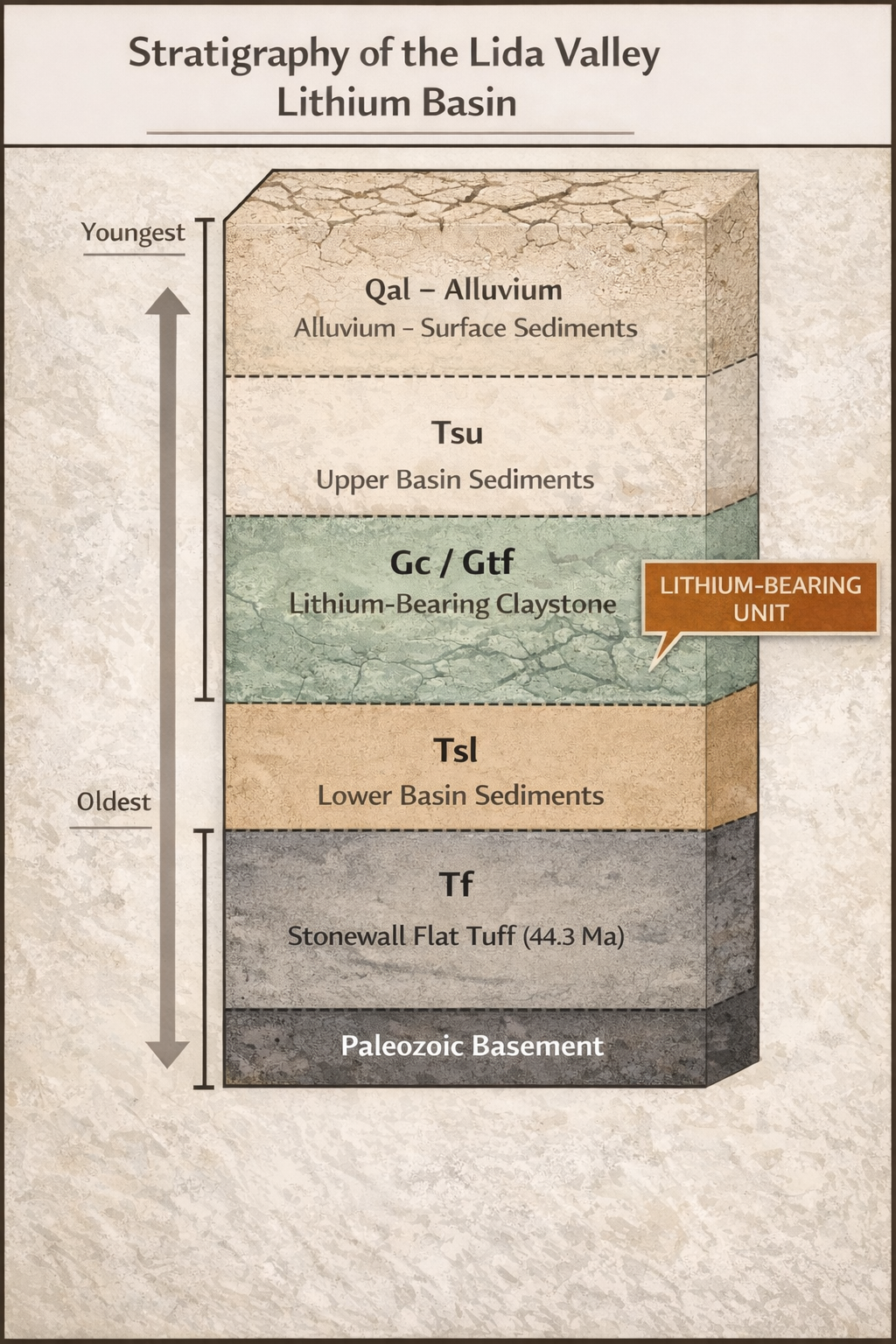
Exploration has confirmed laterally continuous lithium-bearing claystone across multiple drill holes, with consistent stratigraphy and strong correlation between drilling and geophysical data. The primary lithium host occurs within a green lacustrine claystone unit (Gc/Gtf), which is laterally persistent and forms the core exploration target
Why The Lida Valley Lithium Project Is Different
Basin-Scale Consolidation
The LVL, EZ, and Gemini claim blocks combine into a unified lithium system, controlling a large portion of the basin.
Exceptional Thickness
Drilling has confirmed lithium-bearing clay intervals ranging from hundreds to over 1,000 feet in thickness.
Expansion Potential
Large portions of the basin remain untested, particularly at depth and between known mineralized areas.
Consistent Mineralization
Multiple drill campaigns have returned strong lithium grades across separate zones of the project.
Validated Targeting
Geophysical surveys show strong correlation with drilling, increasing confidence in undrilled targets.
Geology & Mineralization
Lithium mineralization at Lida Valley is hosted within a sequence of basin-fill sediments deposited in an ancient lacustrine environment.
The primary target is a laterally continuous green claystone unit (Gc/Gtf), which hosts the majority of lithium mineralization identified in drilling. This unit is consistently encountered across both the Lida Valley and Gemini basins and forms the core exploration horizon.
A regionally consistent welded tuff unit (Stonewall Flat Tuff) underlies the claystone and serves as a key marker horizon, enabling reliable correlation across the basin.
This well-defined stratigraphic framework supports predictable targeting and reinforces the interpretation of a large, basin-scale lithium system.
Basin Architecture & Targeting
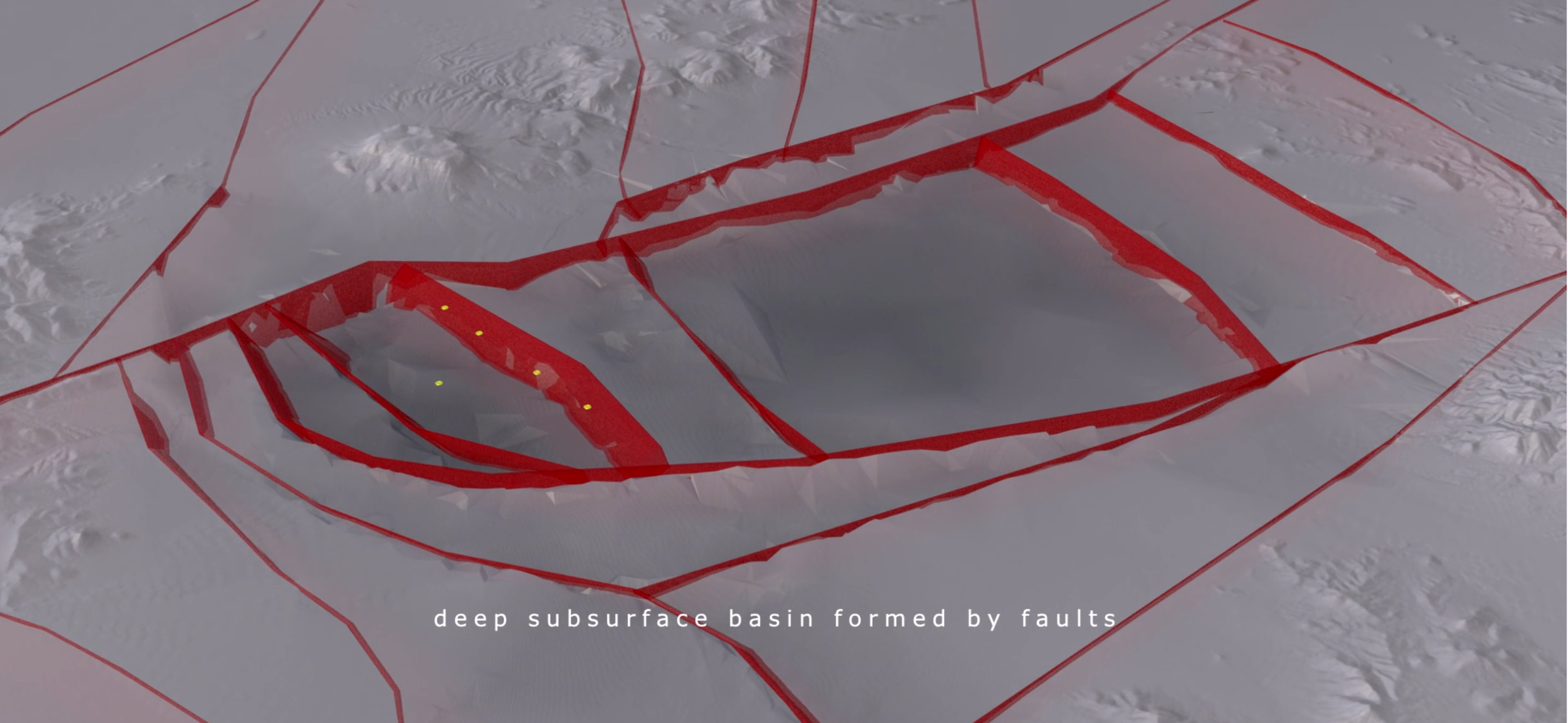
The Lida Valley basin is a structurally controlled system formed within the Walker Lane tectonic zone, where faulting has created multiple sub-basins capable of hosting thick accumulations of lithium-bearing sediments.
Geophysical data, including gravity and TEM surveys, define deeper basin centers and structural trends that extend beyond currently drilled areas. These datasets indicate that the thickest portions of the system remain only partially tested.
Distinct sub-basins and fault-controlled domains have been identified, supporting the interpretation of a large-scale lithium system with significant depth potential.
Significant Expansion Potential
Depth Potential
Drilling to date has not fully tested the deepest portions of the basin, where thicker lithium-bearing clay sequences are expected based on geophysical data.
Basin Continuity
Geological and geophysical data support continuity between the Lida Valley and Gemini basins, indicating a unified lithium system
Untested Targets
Multiple high-priority geophysical anomalies remain undrilled, providing clear targets for future exploration.
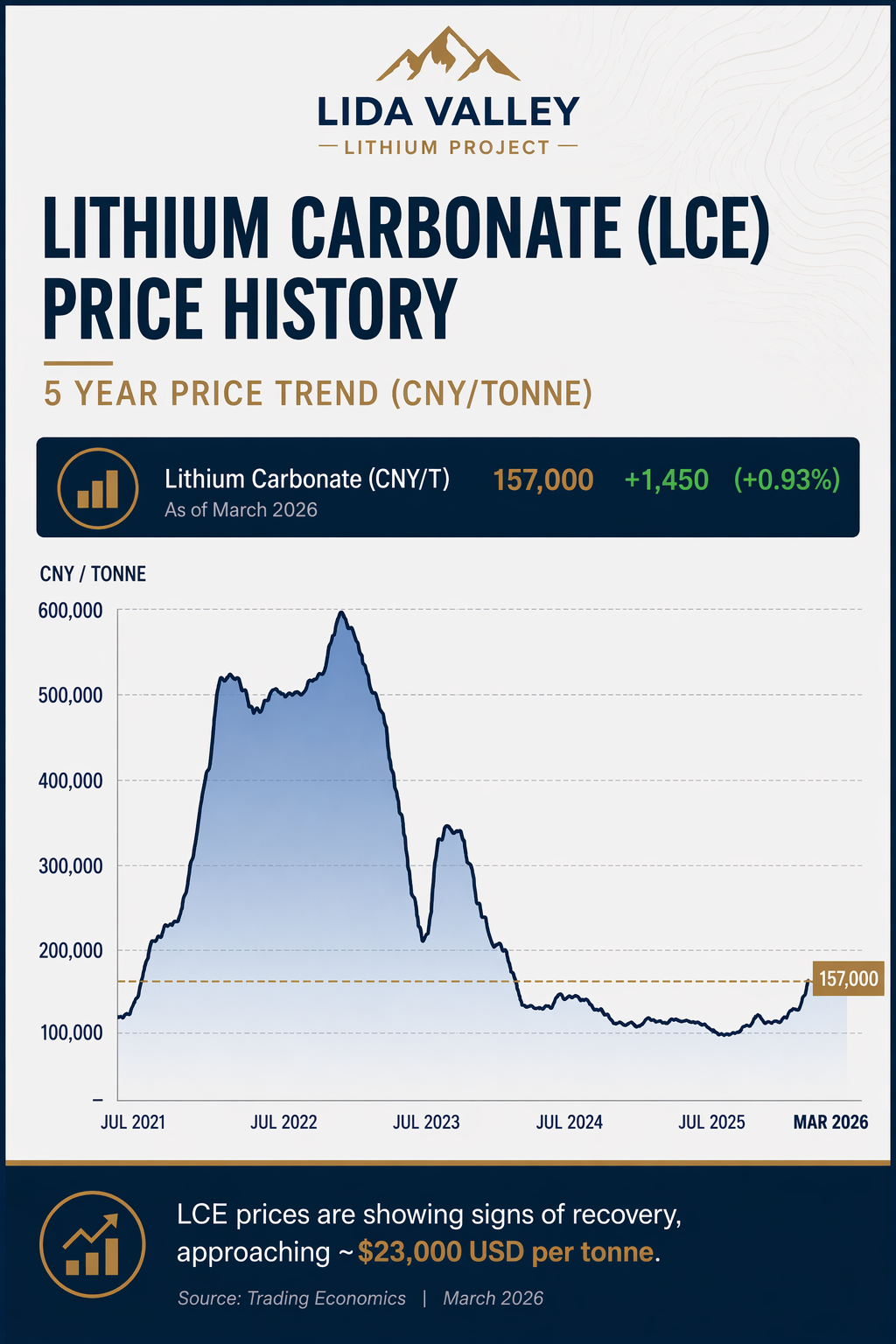
Counter-cyclical Growth Strategy
Capital Efficiency in Drilling
B&N Mining Company with Unhinged Geology has executed multiple drilling campaigns during a reduced-cost environment
The Lida Valley Lithium Project has maximized footage and data acquisition per dollar deployed
The Project has aimed to and successfully confirmed lithium-bearing claystone across LVL and EZ and Gemini claim blocks positioning the property well heading into a market up swing
2026 drilling contract secured before upswing in market at flat rate all in cost
Positioning The Lida Valley Lithium Project For The Next Lithium Cycle Through Disciplined, Data-driven Advancement
Opportunistic Basin Expansion
B&N Mining Company leveraged lithium market downturn to expand the total LVL project land position
B&N Mining Company acquired the Gemini Project through cash sale from Nevada Sunrise, adding deep basin context to the data set along with all other Gemini project related data and reports
The Lida Valley Lithium Project consolidated control across the eastern basin with the EZ block acquisition of unexplored claims
Together the LVL, EZ, and Gemini blocks create a complete package containing the full basin-scale lithium system
Technical De-Risking & Scale Definition
With basin architecture established, lithium-bearing clay horizons confirmed, and a unified 849-claim land position secured, the project is transitioning into systematic expansion and data-density refinement.
The next phase of advancement is focused on:
Step-out drilling across under-tested basin corridors
Infill drilling to improve stratigraphic continuity and geological confidence
Ongoing validation and technical review of legacy drilling data
Progressive technical work supporting resource definition
This staged approach is designed to reduce geological uncertainty in a controlled manner while positioning the project for long-term development optionality within Nevada’s established regulatory framework.
Technical summaries and supporting datasets are available upon execution of a Non-Disclosure Agreement.
Strategic Nevada Location
Demonstrated Potential
for a Major Clay-Hosted Lithium Discovery in a Top-Ranked Mining Jurisdiction
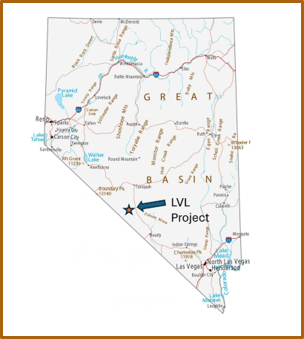
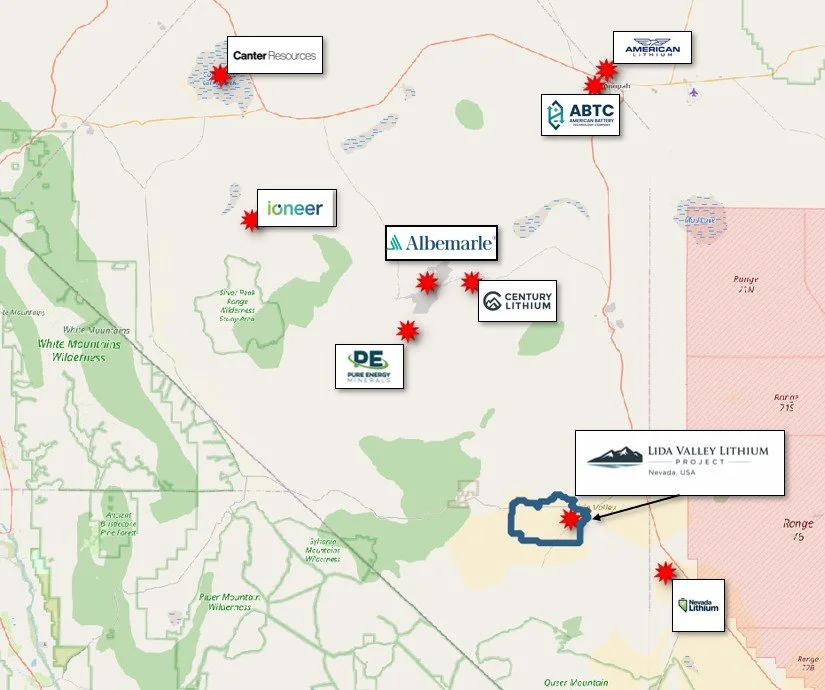
•The Lida Valley Lithium (LVL) Project is a B&N Mining Company LLC project located 20 miles southwest of Goldfield Nevada in Lida Valley, (Esmeralda County, Nevada) within the central Walker Lane structural corridor, a region recognized for its large, closed basins and emerging lithium-bearing claystone deposits. The project area spans the LVL, EZ, and Gemini claim blocks, which together comprise over 17,000 acres covering 849 unpatented federal mining claims administered by the Bureau of Land Management (BLM). This combined land position provides full coverage of the principal basin floor, the flanking structural margins, and multiple deep structural lows interpreted to control the distribution of lithium-rich tuffaceous clays. Access to the project is reliable year-round via county and state-maintained roads extending south from Goldfield and west from Lida Junction.